Home — Origin
Hand-hammered in Kathmandu, under our supervision
It begins with the requirements for the parameters of a bowl, worked out over years of practice in sound resonance and vibro-acoustic therapy. We place the order with craftsmen who have earned our trust, so that the instruments come out with better characteristics from the start. The forging technology is far more complex and far longer than in mass production, which is why professional singing and massage bowls and sets cost more.
After that come the technically demanding stages, from polishing and grinding to engraving. Nothing is pressed and nothing is stamped: eighteen craftsmen, fifteen years of working together, and many cycles of heating and forging, polishing and engraving, before a bowl becomes a professional instrument for sound therapy. It is the repetition of those cycles that is the hardest part — and exactly why the bowls sound so good.
In the workshop
From a piece of metal to an instrument
The order of the stages is ordinary metalwork. The difficulty is in the figures the craftsmen are working towards, and in how many forging cycles it takes to reach them.

01
Working with the craftsmen
Before anything is forged, the requirements for the batch are agreed in the workshop: what has to be reached and how it will be checked. The same people have been doing this with us for fifteen years.
02
Melting
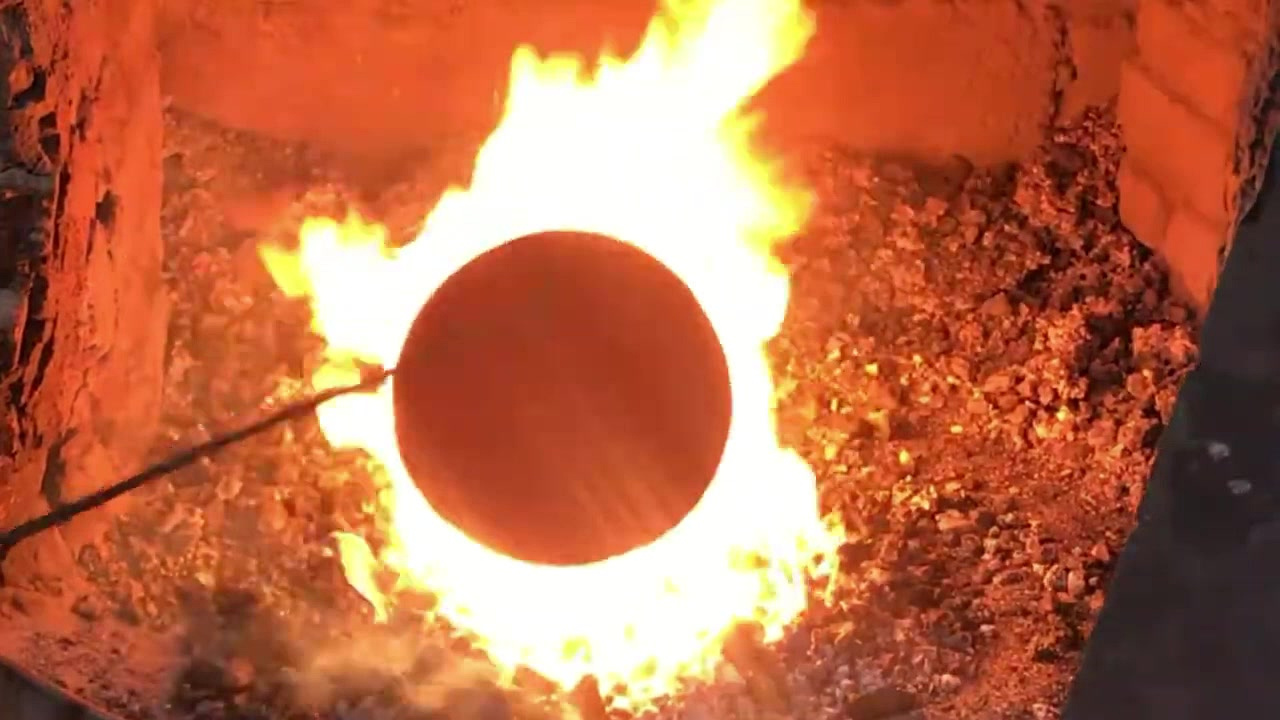
Copper and tin go into the furnace together and are poured into a disc. The proportion is fixed; it is what makes the metal ring rather than sound dull.
03
Forging in cycles
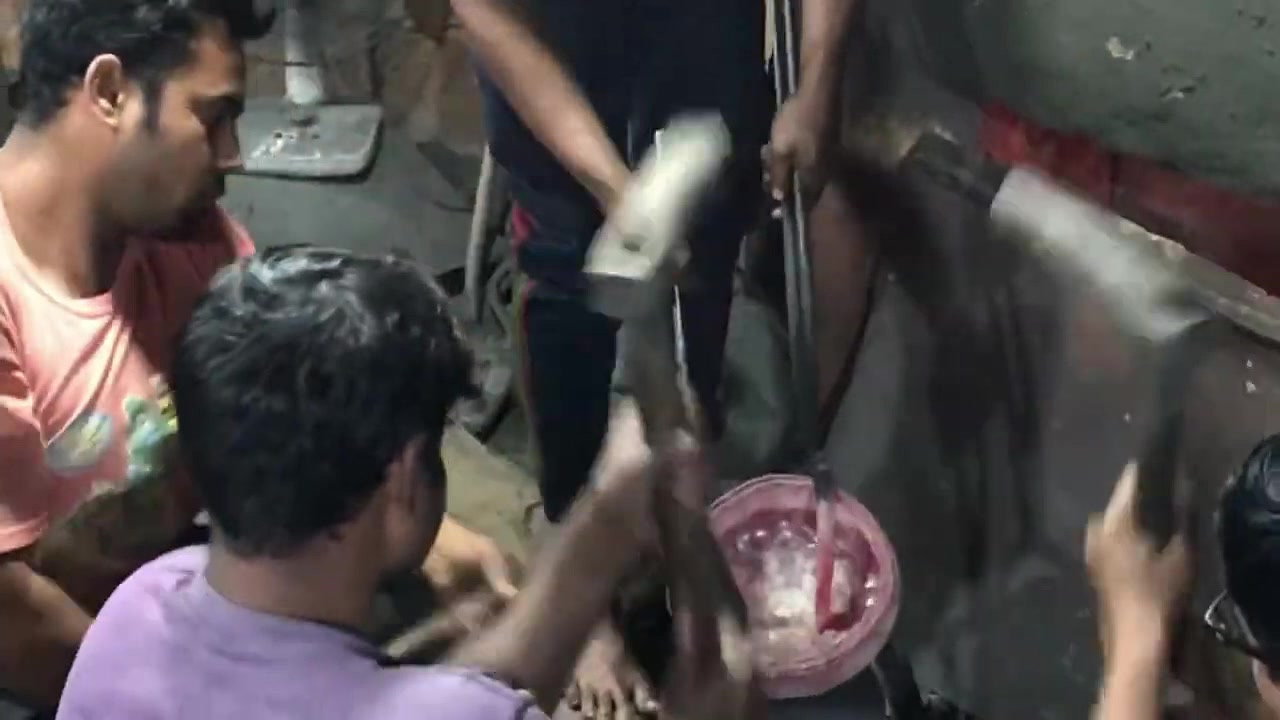
Three or four craftsmen strike in turn, and the disc goes back into the fire again and again. A single heating would be quicker, but the bowl it produced would ring once and fall silent.
04
Turning and finishing
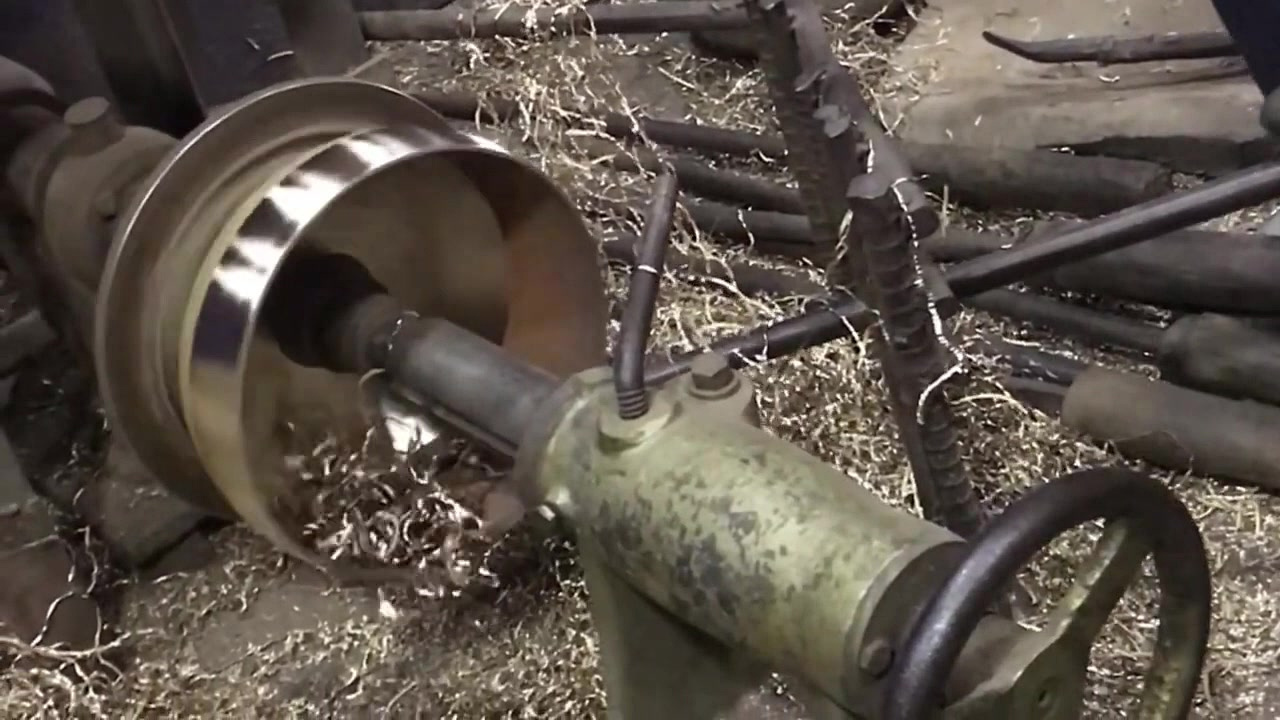
Wall thickness is evened out to the figure specified for that bowl — this is what sets the pitch. The rim is finished last, because in contact work it stays in contact with the body for the whole session.
05
Finish
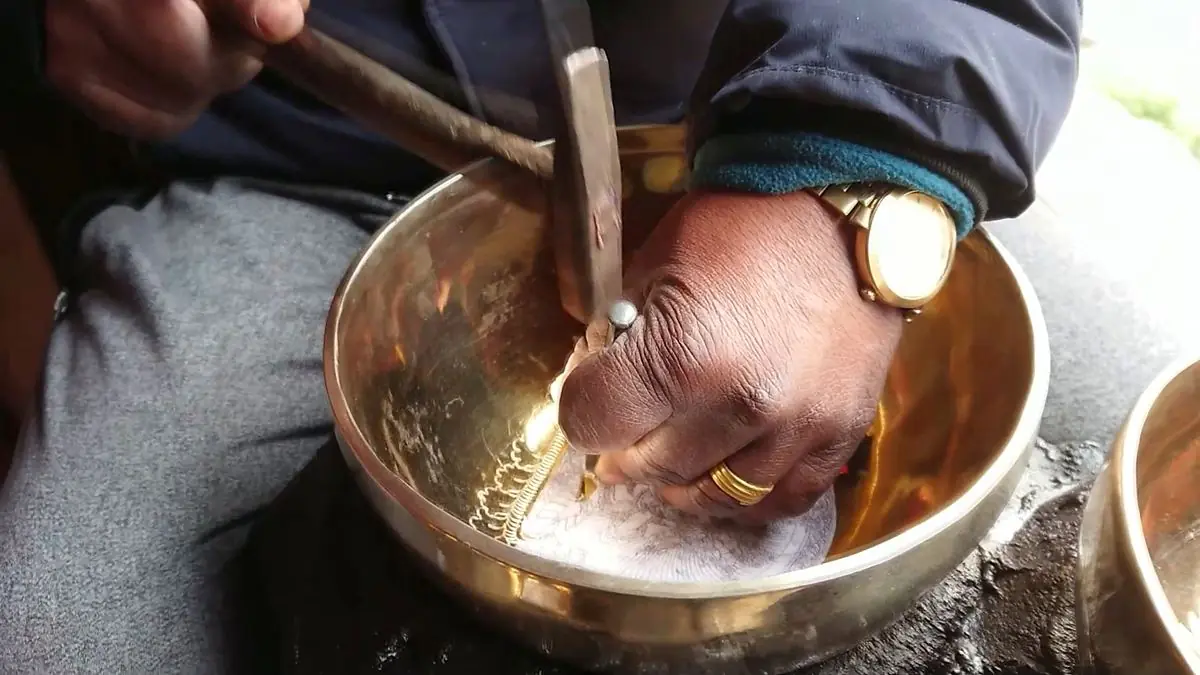
A special coating gives the official Healingbowl® lines their recognisable look. The mark is punched by hand — and some bowls are lost at exactly this point: one hammer blow harder than it should be, and a finished bowl goes back to the furnace.
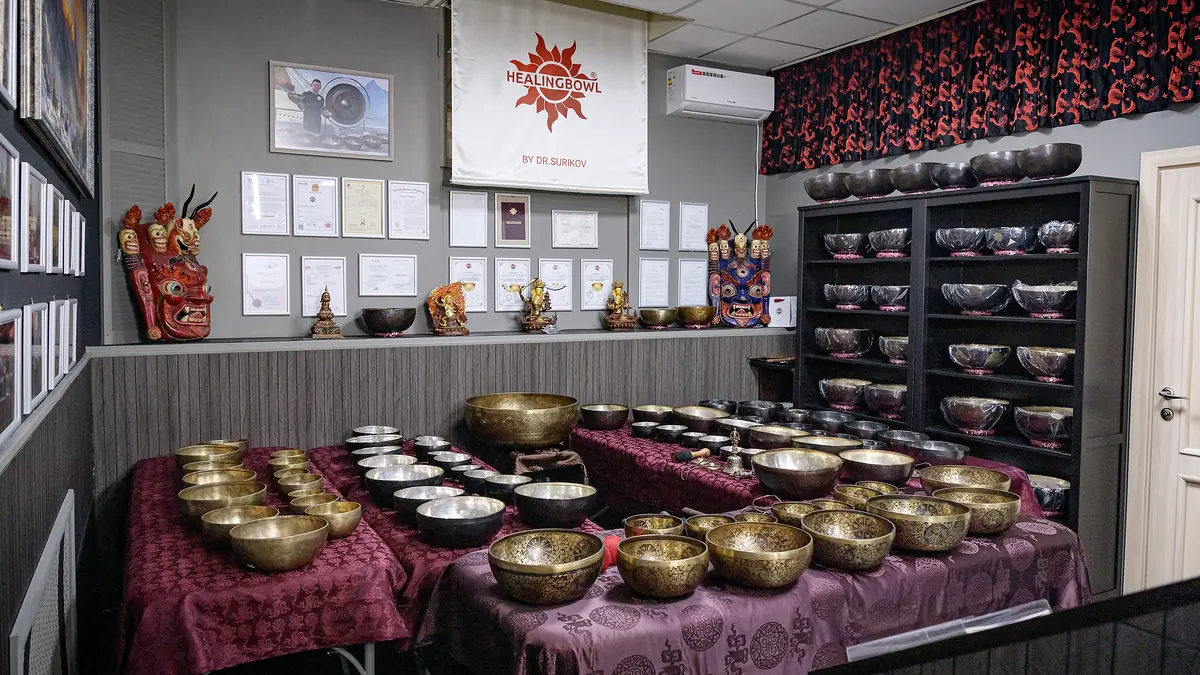
06
The finished set
The finished bowls are assembled into sets by a standardised note-and-maths scheme. The scheme is the same for every set; the starting point is not. One set begins at 90 Hz, another at 120 or 140, and the step between bowls is calculated from there. That is why every set sounds its own way.
Cast in bell bronze, worked like a cymbal
Church bells of the same alloy are cast in a single pour and then tuned by shaving metal on a lathe. Cymbals — the other instrument made from bell bronze — are put through repeated cycles of heating, rolling and hammering, because metal with this much tin will not take cold working.
Our bowls are made the second way, and by hand: the disc is heated, forged and heated again — as many times as this particular bowl requires. In this trade it is taken as read that beyond the composition of the alloy, how the metal is worked matters enormously: temperatures, holding times, the rate of cooling. Our secret is in the quality of the forging.
The workshop receives requirements for characteristics, not wishes
Every order goes to the workshops with defined requirements for the bowls: the intervals between them, the upper and lower limits of the range, the target for each position in the set. That is what makes the set one instrument rather than fourteen separate bowls.
The number of cycles, the temperatures and the target values themselves are the brand's intellectual property and are not published. We describe the result and let you hear it; the recipe stays in the workshop.
A set has fourteen positions, and each has its own target figures. A bowl can be excellent on its own and still match none of them — and then it does not go into the set.
Every bowl is checked on its own, then as part of a set
- Every bowl on its ownThe main tone, the range of overtones, the sound and the decay time are measured before a bowl passes selection.
- Then the full set togetherThe full set of fourteen bowls is played together. What matters is how the bowls sound with one another: it is a chorus of overtones, and it has to sound in unison and combine well. If one of the bowls is out of tune with the rest, it is replaced.
- Massage bowls are checked differentlyMassage bowls arrive in batches, already prepared to our requirements — and one is chosen out of ten. What decides it is whether the bowl will give an even, deep vibration and a pleasant, calming sound, or merely an unpleasant, agitating ring.
The workshop
We do not take visitors to the workshops
Eighteen craftsmen, fifteen years of working with the same people. We do not give the craftsmen's names or the workshops' addresses: that remains ours to keep. But we are glad to show the quality at a therapy session or on video.
We are also glad to provide documents on request: the alloy analysis, the patent and the trademark certificates.